Table of Contents
- Why Police K9s Are at Higher Risk
- How Fast Things Go Wrong Inside a Vehicle
- What Heat Actually Does to a Dog
- Signs Every Handler Should Know
- Safe Temperature Ranges for K9 Travel
- Equipment That Actually Helps
- Daily Protocol That Actually Gets Used
- Why Silent Failures Are the Real Threat
- Building a Department-Level Protocol
- Seasonal Awareness Beyond Summer
- Your K9 Would Run Into a Fire for You
- FAQs
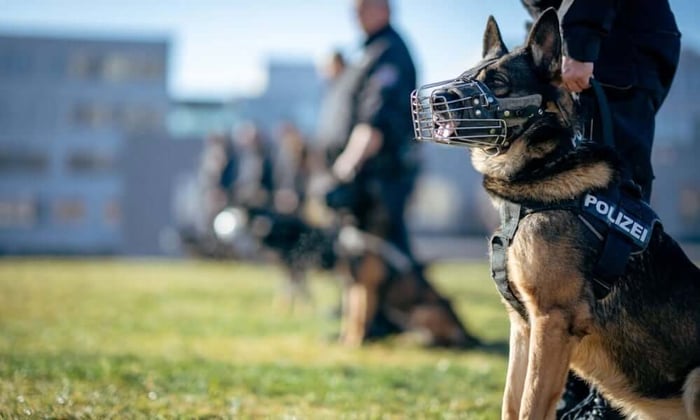
A police K9 is a trained partner. In high-risk situations, that dog is often the reason an officer comes home. But when summer hits, even the most elite working dog becomes vulnerable to something fast and entirely preventable: heat.
This isn't optional. Patrol vehicles can turn dangerous in minutes, and working breeds push themselves hard even when their bodies are telling them to stop. Knowing how heat builds, what it does to a working dog, and how to stay ahead of it keeps your partner alive and your department out of the kind of situation nobody recovers from.
Why Police K9s Are at Higher Risk
Most police K9s are German Shepherds or Belgian Malinois. These dogs are built for intensity. They were bred to keep going when most animals would quit, and that's exactly what makes them dangerous to themselves in heat.
Unlike a family pet lounging in a shaded yard, a K9 on duty spends hours locked in a patrol vehicle, works through high-adrenaline calls, sometimes wears tracking or protective gear, and responds to situations that don't allow for slow, careful observation. A pet owner sitting at home notices when their dog is panting too hard. An officer running between calls, traffic stops, and paperwork may not catch the gradual temperature spike inside the K9 compartment until it's already a problem.
How Fast Things Go Wrong Inside a Vehicle
Cracking a window doesn't fix this. Parking in partial shade doesn't fix it either.
On a warm day, the inside of a parked car can climb 20-40 degrees above the outside temperature in under 30 minutes. On a genuinely hot day, that spike happens faster. Even vehicles with K9-specific cooling systems and ventilation carry real risk when a fan motor fails, the AC shuts off, a fuse blows, or the engine stalls. A patrol car sitting in 85-degree ambient air can push past 100 degrees internally without anyone noticing.
For a police K9 already running hot from a call, that environment can tip into heat stress within minutes.
What Heat Actually Does to a Dog
Dogs cool themselves by panting. They don't sweat the way humans do, which means when the air around them is hot and humid, panting loses its effectiveness fast.
As a dog's body temperature climbs, panting gets more aggressive, heart rate goes up, dehydration accelerates, and organs start to strain. Heat exhaustion sets in around 104 degrees. At 106 and above, heatstroke causes organ failure, brain damage, and death. Police K9s are trained to push through discomfort, so they often won't slow down on their own. By the time visible distress appears, the situation can already be serious.
Signs Every Handler Should Know
Early warning signs are excessive panting, thick drooling, bright red or pale gums, restlessness, and a slower response to commands. If those get missed, the next stage includes vomiting, stumbling, disorientation, collapse, and seizures.
If heatstroke is suspected, cool the dog immediately and get to a vet. Every minute matters.
Safe Temperature Ranges for K9 Travel
General guidelines put the ideal vehicle temperature between 65 and 75 degrees. The 80-85 range is worth watching closely. Anything above 90 is dangerous, and above 100 is an emergency.
Humidity matters too. High humidity cuts evaporative cooling from panting, which means a 78-degree day with heavy humidity can hit harder than a dry 85.
Equipment That Actually Helps
Modern K9 patrol vehicles typically include dedicated AC systems, automatic heat alarms, window drop systems, and backup fans. That setup is a solid baseline, but equipment fails. A fan motor goes out without warning. A fuse blows. The system gets accidentally disabled. Daily testing isn't paranoia because it's the only way to catch a failure before it becomes a death sentence.
Real-time temperature monitoring is where most departments have the most room to improve. A reliable system watches the vehicle's interior temperature continuously and sends immediate alerts by SMS or app when thresholds are crossed. It needs to work off cellular, not Wi-Fi, because patrol vehicles move. They pass through dead zones, park in underground garages, and end up in places where a Wi-Fi-dependent system would go silent right when it needs to work.
The most dangerous heat events are the silent ones. A failure that triggers no alert, shows no visible sign, and goes unnoticed until someone returns to the vehicle. Battery backup makes sure monitoring keeps running even if the vehicle loses power.
Temperature monitoring, such as Necto, matters anywhere animals or people are inside a vehicle or enclosed space. A good monitoring system doesn't just give you data, it gives you time to act.
Daily Protocol That Actually Gets Used
The departments that consistently avoid heat incidents follow simple, repeatable routines. Every shift starts with testing the cooling system, confirming alert connectivity, verifying sensors, and checking battery backup. Mid-shift means vehicle checks, close attention to hydration, and easing up on work intensity during peak afternoon heat. After the shift, handlers review temperature logs, flag anything unusual, and schedule maintenance if something looks off.
None of this is complicated. It just has to happen every day.
Why Silent Failures Are the Real Threat
Most K9 heat incidents don't happen because someone decided to cut corners. They happen because something failed quietly and nobody knew until it was too late, an alert that was never sent, a sensor that gave out, a vehicle that shut off while the handler was inside running a call. The gap between safe and fatal conditions is measured in minutes, and a failure that doesn't announce itself is the scariest kind.
That's why layered protection matters: cooling system, real-time alerts, battery backup, and daily checks. Any one of those alone has gaps. All four together close most of them.
Building a Department-Level Protocol
Individual handlers doing the right thing isn't enough. Department-wide policy is what makes safety consistent across shifts, vehicles, and personnel.
A real K9 heat safety protocol includes written temperature thresholds, mandatory alert systems in all K9 vehicles, seasonal equipment inspections, training for every handler, documented emergency response procedures, and a log of system tests. Treat it the same way the department treats firearm safety or pursuit policy. No shortcuts.
Seasonal Awareness Beyond Summer
Heat safety doesn't start on June 1 and end on September 1. Spring and early fall bring surprise heat waves that catch departments unprepared. Seasonal transitions are the right time to reset alert thresholds, check compartment insulation, and add more hydration breaks to the rotation. Tracking interior vehicle temperature data over time helps identify which months actually run hot in your specific region.
Your K9 Would Run Into a Fire for You
That's not a metaphor. These dogs follow their handlers into situations most people run from, without hesitation, because that's what they're trained to do and because after enough shifts together, the trust goes both ways.
Keeping them cool during transport is one of the few things in this job that's entirely within your control. The tools exist, the protocols are straightforward, and the stakes don't get much higher. Get the monitoring in place, run the daily checks, and build the department policy that makes this consistent. Your partner deserves that much.
Your K9 would run into danger without hesitation, so make sure their transport is just as protected. Don’t wait for a silent failure to become a tragedy. Call Necto today and equip your patrol vehicles with real-time temperature monitoring that gives you the time to act when it matters most.
FAQs
Why is police K9 heat safety more critical than regular pet heat safety?
Police K9s, especially breeds like the German Shepherd and Belgian Malinois, are trained to push through discomfort. Unlike household pets, they work in high-adrenaline environments, wear protective gear, and often remain inside patrol vehicles for extended periods. This combination significantly increases their risk of heat exhaustion and heatstroke.
How fast can a patrol vehicle become dangerous for a K9?
A parked patrol vehicle can increase 20–40 degrees above the outside temperature in less than 30 minutes. On hot days, internal temperatures can exceed 100°F very quickly. Even with K9 cooling systems installed, mechanical failures like AC shutdowns or blown fuses can create dangerous conditions in minutes.
What temperature is considered safe for police K9 travel?
For optimal police K9 heat safety:
65–75°F – Ideal and safe
80–85°F – Monitor closely
90°F+ – Dangerous
100°F+ – Emergency
Humidity also plays a major role. High humidity reduces the effectiveness of panting, increasing risk even at moderate temperatures.
What are the early signs of heat stress in a police K9?
Early warning signs include:
Excessive panting
Thick drooling
Bright red or pale gums
Restlessness
Slower response to commands
Advanced symptoms may include vomiting, stumbling, collapse, or seizures. Immediate cooling and emergency veterinary care are critical if heatstroke is suspected.
Why doesn’t cracking a window prevent heat buildup?
Cracking windows or parking in partial shade does very little to stop internal heat buildup. Vehicles trap radiant heat, and airflow from a cracked window is not enough to regulate interior temperatures during warm or hot conditions.
Are built-in K9 cooling systems enough?
Modern K9 units often include:
Dedicated AC systems
Heat alarms
Automatic window drop systems
Backup ventilation fans
These are important safeguards, but they are not failproof. Silent failures — like a fan motor failing or a power interruption — can go unnoticed without continuous monitoring.
What is real-time temperature monitoring for K9 vehicles?
Real-time monitoring systems track the interior temperature of the K9 compartment continuously. If temperatures exceed preset thresholds, alerts are sent via SMS or mobile app.
Systems that operate over cellular networks (not Wi-Fi) are essential because patrol vehicles move through areas where Wi-Fi connectivity may be unreliable.
Solutions like Necto provide real-time alerts and battery backup, helping departments respond before a situation becomes life-threatening.
Why are “silent failures” so dangerous?
Most K9 heat incidents occur when something fails quietly:
AC shuts off
Vehicle stalls
Alert system disconnects
Sensor stops working
Without a notification, handlers may not realize temperatures are rising. Because the difference between safe and fatal conditions can be just minutes, layered protection is essential.
What should be included in a department-level K9 heat safety policy?
A comprehensive police K9 heat safety protocol should include:
Written temperature thresholds
Mandatory real-time monitoring systems
Seasonal inspections
Daily cooling system checks
Documented emergency response procedures
Ongoing handler training
Consistency across all shifts and vehicles is critical.
Does police K9 heat safety only matter during summer?
No. Heat risks extend beyond peak summer months. Spring and early fall heat waves can catch departments unprepared. Seasonal transitions are ideal times to inspect equipment, adjust alert thresholds, and review monitoring logs.
What should a handler do if heatstroke is suspected?
If heatstroke is suspected:
Move the dog to a cooler area immediately.
Begin gradual cooling (cool water, not ice baths).
Seek emergency veterinary care immediately.
Every minute counts when a K9’s core temperature rises above 104°F.
Why is layered protection the best approach?
The safest setup includes:
Functional cooling systems
Real-time cellular-based temperature alerts
Battery backup systems
Daily equipment checks
No single safeguard is enough. Layered protection closes the gaps that lead to tragedy.