Table of Contents
- Why These Medications Are So Unforgiving
- What Actually Happens When the Power Goes Out
- Backup Power: No Longer Optional
- Generators vs. Battery Backup: What the Difference Actually Means
- Sizing Matters More Than Most People Realize
- Monitoring: The Half of the Problem Most Pharmacies Skip
- Building a Response Plan That Actually Works
- Protecting Cold Storage Is Protecting the Business
- FAQs
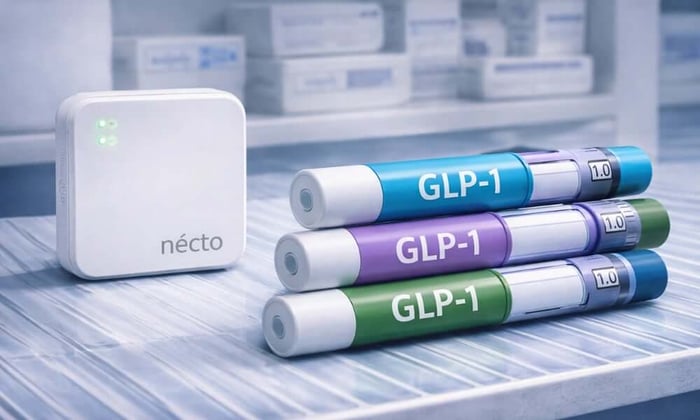
If your pharmacy carries GLP-1 medications, you already know the stakes are high. These drugs, think semaglutide and tirzepatide, have reshaped modern prescribing, and demand keeps climbing. But with that growth comes a problem most pharmacies are still figuring out: GLP-1 medication storage is now one of the most financially exposed positions in the building, and a single power outage can turn a refrigerator full of product into a very expensive disposal problem.
This article walks through exactly what that risk looks like, what actually happens to inventory during an outage, and what pharmacies can do to protect themselves before something goes wrong.
Why These Medications Are So Unforgiving
GLP-1 receptor agonists must stay between 36°F and 46°F (2°C to 8°C). That's the standard refrigerated range for plenty of medications, but what makes GLP-1s different is the dollar value packed into each unit and the clinical consequences if that cold chain breaks.
Temperature excursions, even brief ones, can compromise a medication's effectiveness without any visible sign. There's no color change, no smell, no obvious indication that something is wrong. A vial can look perfectly fine and still be unsafe to dispense. That's what makes this so tricky. Staff can't rely on visual checks, and by the time a problem is suspected, the window to act has usually passed.
The cost of getting this wrong is not theoretical. A single pharmacy refrigerator can hold $50,000 to well over $150,000 worth of GLP-1 medications. In high-volume locations or specialty pharmacies, that number climbs further. Multiply that across multiple units or multiple locations, and the financial exposure becomes very real, very fast.
What Actually Happens When the Power Goes Out
Pharmacy-grade refrigerators are designed to hold temperatures well when they have power. Once that power cuts, the clock starts. How fast the internal temperature drifts depends on a few things: the ambient room temperature, how well the unit is insulated, whether anyone opens the door, and how the compressor was cycling just before the outage.
In many cases, temperatures can begin moving outside the safe range faster than expected. The exact window varies, but it's rarely as long as pharmacies assume.
When an excursion happens, the pharmacy's obligations kick in immediately:
Document when the excursion started and how far temperatures deviated
Consult the manufacturer's guidance or relevant state board regulations
Determine whether the affected stock can still be dispensed
If there's any doubt, disposal is the safe call. That's the moment a short outage becomes a major financial event. Insurance may cover a portion of the loss, but claims take time, documentation requirements are strict, and coverage rarely makes the pharmacy whole. The operational disruption, patients waiting on refills, and staff managing the fallout add costs that don't show up on an insurance claim at all.
Backup Power: No Longer Optional
For a long time, backup power for pharmacy refrigeration was treated as a nice-to-have. That calculus has shifted. Proper GLP-1 medication storage now accounts for a growing share of pharmacy revenue, which means refrigeration reliability is directly tied to the financial health of the business.
Power disruptions are more common than they used to be. Grid stress during extreme weather events, aging infrastructure in many regions, and increased demand from new construction all contribute to more frequent outages - not fewer. Waiting for an outage to happen before addressing backup power is a risk that's hard to justify when the potential loss runs into six figures.
The question isn't really whether to invest in backup power. It's which type makes sense.
Generators vs. Battery Backup: What the Difference Actually Means
Traditional generators have been the go-to backup solution for decades, and they work. But they come with real limitations in a pharmacy context.
Most generators require either manual startup or an automatic transfer switch that takes a few seconds to activate. During a power failure, that gap matters. Generator systems also depend on fuel, diesel or propane, that needs to be on hand and regularly checked. Maintenance schedules are real, and if a generator hasn't been tested recently, there's no guarantee it will start when needed.
Battery backup systems address several of those problems directly. They activate instantly with no transfer delay, require no fuel, and need far less maintenance. For protecting refrigeration equipment, where every minute of temperature stability counts, the instant switchover is a genuine advantage.
That said, battery systems have their own constraints. They're better suited for short to medium-length outages, enough to cover most grid disruptions, but extended outages may still require a generator for longer-term coverage. For many pharmacies, a combination of both, or a properly sized battery backup for refrigeration specifically, hits the right balance.
Sizing Matters More Than Most People Realize
A backup power system that's the wrong size will either waste money or fail to protect what it's supposed to protect. Refrigerators don't draw power at a flat rate, compressors cycle on and off, and each startup draws a brief surge of power that's higher than the running load. A backup system has to handle both.
When calculating what's needed, pharmacies should account for:
The total number of refrigeration units that need protection
The startup surge requirements for each compressor
How long the system needs to run during a typical outage
Getting this right usually means working with a technician who can measure actual loads rather than relying on the specs printed on the equipment. Under-sizing creates risk. Over-sizing wastes capital that could go elsewhere.
Monitoring: The Half of the Problem Most Pharmacies Skip
Backup power keeps the refrigerator running. Monitoring tells the pharmacy what's actually happening inside it, and whether the backup system is doing its job.
Necto temperature monitoring closes the gap between when something goes wrong and when someone finds out about it. Without it, an overnight outage that overwhelmed a backup system might not be discovered until morning, at which point the medications have already been compromised for hours.
Reliable environmental monitoring matters specifically because GLP-1 medication storage conditions can change without any external sign. A door left slightly ajar, a compressor that's starting to fail, a backup battery that didn't hold its charge, none of these announce themselves. A monitoring system that tracks temperature continuously and sends alerts when readings move outside the set range gives pharmacies the ability to respond, not just discover problems after the fact.
One thing worth noting: monitoring systems that rely on WiFi have an obvious weakness during power outages. When the power goes out, routers often go down too. Necto has a cellular-connected monitoring system, one that uses 4G rather than the facility's internet connection, and keeps sending alerts even when the local network is dark. For pharmacies managing multiple locations, that kind of reliability makes it possible to know which sites are affected and act with real information rather than guessing.
Building a Response Plan That Actually Works
Technology handles a lot, but staff behavior during an outage still determines whether the plan succeeds. A few practices make a real difference.
Keeping refrigerator doors closed is the single most effective way to extend safe temperatures during a power interruption. Every door opening accelerates temperature rise. Staff should know this going in, not find out when it matters.
Having a relocation plan for extended outages is worth thinking through before it's needed. Which facilities nearby have backup power? What's the protocol for transferring inventory safely? These decisions are easier to make in advance than under pressure.
Testing backup equipment regularly is one of those things that tends to get skipped until it's too late. A generator or battery system that hasn't been tested recently is a liability, not an asset. Scheduled tests, documented ones, confirm the system will actually work when called on.
Training staff on the documentation requirements for temperature excursions keeps the pharmacy compliant even in worst-case scenarios. Regulators and insurers both want records. Having a clear protocol means staff aren't scrambling to reconstruct a timeline after the fact.
Protecting Cold Storage Is Protecting the Business
GLP-1 prescriptions are not slowing down. Pharmacy inventories are growing, and the financial concentration in cold storage is growing with them. What used to be a manageable risk has become a serious exposure that most pharmacies are still underprotected against.
The good news is that protecting this inventory is achievable with a combination of well-sized backup power, real-time monitoring with cellular connectivity, and staff who know what to do when an outage hits. GLP-1 medication storage does not have to be the liability it currently is for most pharmacies. None of this is complicated, but all of it requires doing the work before the outage, not after.
If your pharmacy is ready to get serious about protecting its cold storage inventory, contact Necto today.
FAQs
Why are GLP-1 medications at high risk during power outages?
GLP-1 medications must stay within a strict refrigerated range, and even brief temperature changes can make them ineffective. Because there are no visible signs of damage, pharmacies may not realize inventory is compromised until it’s too late.
What temperature should GLP-1 medications be stored at?
GLP-1 medications should be stored between 2°C and 8°C (36°F to 46°F). Any deviation outside this range can impact their safety and effectiveness.
How much financial risk is involved with GLP-1 medication storage?
A single refrigerator can hold $50,000 to over $150,000 worth of GLP-1 medications. In larger or multi-location pharmacies, the total exposure can be significantly higher.
What happens to GLP-1 medications during a power outage?
Once power is lost, refrigerator temperatures begin to rise. Depending on conditions, temperatures can move خارج the safe range faster than expected, potentially compromising the medications.
Can pharmacies tell if GLP-1 medications are damaged?
Answer:
No. GLP-1 medications typically show no visible signs of temperature damage, which is why monitoring and proper documentation are critical.
What should pharmacies do during a temperature excursion?
Pharmacies should document the time and temperature changes, consult manufacturer guidelines or regulators, and determine if the medications are still safe to use. When in doubt, disposal is the safest option.
Why is temperature monitoring just as important as backup power?
Backup power keeps systems running, but monitoring confirms whether temperatures remain safe. Without it, pharmacies may only discover a failure after medications are already compromised.
Why is cellular monitoring more reliable than WiFi during outages?
WiFi systems often fail when power or internet goes down. Cellular monitoring continues to send alerts independently, ensuring pharmacies stay informed even during outages.