Table of Contents
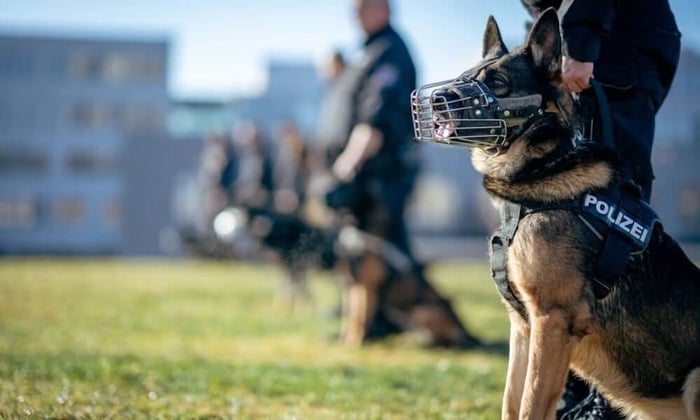
You step out of the police vehicle to handle a call. Your K9 partner stays in the back, AC running, doors locked. Twenty minutes later, you glance at the heat alarm app, and nothing has fired, but something in your gut feels off. You walk back. The engine has stalled. The AC is dead. The interior is past 115 degrees, and your dog is panting hard. That gap between the moment something fails and the moment you find out about it is where K9s are lost every summer.
A police vehicle parked in 80-degree weather can climb past 120 degrees inside within 20 minutes if the AC fails. Direct sunlight pushes the number higher and faster. K9s face heat exhaustion above 85 degrees Fahrenheit and life-threatening conditions above 105. Real-time temperature monitoring with cellular alerts is what closes the warning gap before a partner is lost.
How Hot Does a Police Vehicle Actually Get?
A patrol vehicle parked in an 80-degree ambient temperature can hit 100 degrees inside within 10 minutes and push past 120 degrees within 20 minutes once cooling stops. On a 90-degree afternoon, those numbers climb faster and reach higher peaks. Direct sun on a black or dark blue cruiser makes the situation worse, and the small interior of a K9 compartment heats up faster than the cabin of a personal vehicle.
The math is simple. Glass acts as a one-way valve for radiant heat. Sunlight comes in, bounces around, and gets absorbed by the seats, dashboard, and metal frame. Without active cooling pulling that heat back out, the interior keeps climbing. There is no equilibrium point that is safe for a working dog.
Why K9 Vehicles Are Different From Any Other Patrol Car
A standard patrol car parked in the lot is one thing. A K9 unit in active use during a shift is a different problem. Handlers leave their partners in the vehicle constantly during traffic stops, while writing reports, when answering radio calls, and during meals at the precinct. That adds up to hours of cumulative time the dog spends alone in the cruiser every day.
Modern K9 vehicles have built-in heat alarms that detect when the cabin temperature crosses a set threshold. Some pop-up windows automatically. Some honk the horn. Some send a page to the handler. The problem is that all of those systems depend on the vehicle's electrical system being intact. If the engine stalls because of an alternator issue, a software glitch, or a fuel pump failure, the AC stops working, and the heat alarm may not fire correctly because it is part of the same compromised system.
This is the gap. The vehicle's own systems cannot reliably warn a handler about a failure of the vehicle's own systems.
Where K9 Heat Events Actually Happen on a Shift
A handler runs a routine traffic stop. The plate comes back with a hit. Backup gets called. The driver has paperwork issues that turn a five-minute stop into a thirty-minute investigation. The cruiser stays parked on the shoulder, engine running, AC on, dog in the back. That setup is where most K9 heat events start.
Patrol idle time is the silent risk in K9 work. Engines cut off mid-shift more often than handlers expect, usually from a mechanical or electronic issue that the vehicle's diagnostics will catch later, but does not flag in time. When that happens, the cruiser stays alive on accessory power, but the AC compressor depends on the engine being on. The cabin starts climbing the moment the compressor stops, and the handler is twenty feet away running a license through dispatch with no reason to look back.
There is also the call problem. A welfare check that was supposed to take five minutes runs forty. A domestic statement pulls the handler into a residence for half an hour. The job has a way of expanding past the moment the dog was supposed to be alone for. None of those situations involves the handler doing anything wrong. They involve the work moving faster than the cruiser's onboard heat alarm can react.
The window that matters here is short. Four minutes from AC failure to a 100-degree cabin in summer conditions. Eight minutes to genuinely dangerous territory. When the vehicle's own heat alarm finally pages the handler, the dog has already been in distress for several minutes. That gap is where independent monitoring earns its place.
Why Cellular Monitoring Closes the Warning Gap
Built-in vehicle systems handle some scenarios well. They struggle with the scenarios where the vehicle itself is the failure point. That is where an external monitor changes things.
A cellular temperature monitor sits independent of the patrol vehicle's electrical system. It runs on its own battery during a power loss. It sends alerts directly to the handler's phone over the cellular network, so it works even when the vehicle is parked in a department garage with no Wi-Fi or in a rural area with limited department network coverage.
The handler gets a temperature reading, a humidity reading, and a power-status reading every few minutes. If the vehicle stalls and the AC goes down, the alert hits the handler's phone within seconds, not minutes. That is enough time to walk back to the cruiser, restart it, or get the dog out.
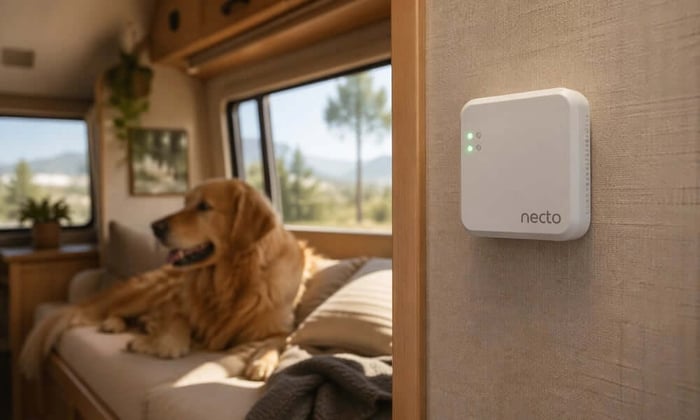
Necto was built for exactly this kind of independent monitoring. It is a 4G LTE cellular sensor that tracks temperature, humidity, and power status in real time and sends alerts to up to five contacts via text and app. The 72-hour battery means a complete loss of vehicle power does not silence the monitor, it triggers an alert. There is no Wi-Fi requirement, no separate cell plan to manage, and the device automatically connects to AT&T, T-Mobile, or Cellular One based on signal. For K9 handlers who need a layer of safety that does not depend on the patrol vehicle's own electrical system, that combination is worth a serious look. More at getnecto.com.
What a Practical K9 Vehicle Monitoring Setup Looks Like
A working setup has three pieces. The first is the vehicle's built-in heat alarm system, which most modern K9 cruisers already have. The second is an independent cellular monitor that does not share electrical or network dependencies with the vehicle. The third is the handler's habits: checking the cruiser visually every 15 to 20 minutes during shifts, parking with shade in mind, and confirming alerts come through when first deployed.
No single layer is enough on its own. A handler relying only on the built-in system has a single point of failure. A handler relying only on visual checks has gaps any time they are on a call. The combination of built-in alerts, an independent cellular monitor, and disciplined habits is what keeps K9s alive through a summer of patrol work.
This is the kind of equipment that sits quietly until the moment it does not. Then it earns its place in the cruiser many times over.
Contact Necto today to find the right monitoring setup for your patrol vehicle and your K9 partner. Whether you run a single cruiser or need coverage across a full K9 division, they can walk you through exactly what you need.
FAQs
At what temperature is a police K9 in danger inside a vehicle?
Working K9s start showing heat stress above 85 degrees Fahrenheit and reach life-threatening core body temperatures around 107 to 109 degrees. Interior cabin temperatures of 100 degrees or higher are unsafe for any extended period.
How fast can a police vehicle heat up if the AC fails?
A cruiser parked in 80-degree weather can climb past 120 degrees inside within 20 minutes after the AC stops. Direct sunlight on a dark vehicle pushes the rate of climb even faster.
Are built-in K9 vehicle heat alarms enough on their own?
Built-in heat alarms work well when the vehicle's electrical system is functioning correctly. They become unreliable when the failure originates with the engine, alternator, or onboard computer. An independent cellular monitor covers that gap.
Does a cellular K9 vehicle monitor work without Wi-Fi or department networks?
Yes. A cellular-based monitor connects directly to commercial 4G networks and sends alerts to the handler's phone. There is no dependency on department Wi-Fi, vehicle hotspots, or internet access at the parking location.
What happens if the patrol vehicle loses power completely?
A monitor with its own battery backup keeps running and immediately sends a power-loss alert to the handler. That early warning is what gives the handler time to act before the cabin temperature reaches dangerous levels.